Donnybrook
October 29, 2026
Season 2026 Episode 44 | 27m 54sVideo has Closed Captions
Charlie Brennan debates with Sarah Fenske, Joe Holleman, Bill McClellan and Alvin Reid.
Charlie Brennan debates with Sarah Fenske, Joe Holleman, Bill McClellan and Alvin Reid.
Problems playing video? | Closed Captioning Feedback
Problems playing video? | Closed Captioning Feedback
Donnybrook is a local public television program presented by Nine PBS
Support for Donnybrook is provided by the Betsy & Thomas O. Patterson Foundation and Design Aire Heating and Cooling.
Donnybrook
October 29, 2026
Season 2026 Episode 44 | 27m 54sVideo has Closed Captions
Charlie Brennan debates with Sarah Fenske, Joe Holleman, Bill McClellan and Alvin Reid.
Problems playing video? | Closed Captioning Feedback
Where to Watch Donnybrook
Donnybrook is available to stream on pbs.org and the PBS app.

Donnybrook Podcast
Donnybrook is now available as a podcast on major podcast networks including iTunes, Spotify, Google Play, and TuneIn. Search for "Donnybrook" using your favorite podcast app!Providing Support for PBS.org
Learn Moreabout PBS online sponsorshipSupport for Donnybrook is provided in part by Design Aire Heating and Cooling.
Donnybrook is made possible by the support of the Betsy and Thomas Patterson Foundation and the members of Nine PBS.
Thank you so much for joining us for this October 29th version of Donnybrook.
It's a scary, spooky time of the year, but don't worry, we've been through elections before.
Hey, we've got lots of things to talk about.
Why don't we meet the panelists and then jump right in.
He's sitting in for the vacationing Wendy Weise, Joe Holleman from the St.
Louis Post-Dispatch.
Also from the Post-Dispatch, Bill McClellan.
From St.
Louis Magazine, the 314 Podcast and her daily newsletter, Sarah Fenske.
And from the St.
Louis American, there he is, Alvin Reid.
Joe, we're going to start with you.
You wrote about politics today.
You're a political columnist for the St.
Louis Post-Dispatch.
Tuesday is the final day that we can vote.
I think that people have been voting in great numbers.
Maybe you could share some thoughts on that.
But you wrote today that Ann Wagner, who has represented the 2nd Congressional District now for about 14 years, she's spending $5.5 million in her race to defeat Fred Wellman, her challenger.
And that's more money than her two previous races combined.
What's your analysis?
Well, according to the experts, and I think it's just general, if you're spending money, you're at least concerned.
Now, people are going, she's afraid, she's worried.
You have the money, spend it.
But yes, she hasn't had a close race since 2020 when Jill Shoup, former state senator and well-known legislator, ran against her.
She spent more money in that race, at least up to the numbers that we have right now.
And she spent money the time before that, court Van Ostrin.
But then there was a redistricting after 2020, and her district became much more Republican.
So she's had kind of an easy go the last couple of elections.
This one, she at least seems to be concerned enough to spend a bunch of money.
She has a bunch of money.
I wish she'd be concerned enough to talk to the press or to meet with constituents.
I have tried my best, Bill.
I know.
I used to know her well.
I was shocked.
She actually showed up at something.
It wasn't open to the public or anything, but she was there at, like, the local MoDOT office.
I thought, oh, boy, Ann's running scared.
You don't see her every day.
And I understand why people don't debate as much as I want them to.
But I think that would have been really kind of cool, helpful in this race.
But I'm sure she doesn't want any part of that.
And, you know, I was the one when this all started that I thought this race would be a lot closer than I think a lot of people did, and that's playing out.
Now, whether he could win or not, I'm not quite there yet, regardless of what the polls say.
But, I mean, it's proving something, you know, all the way around that if that race is close, that means some of the other ones might be won by Democrats, maybe not in Missouri, but across the United States.
And true to form, not only has she spent the money, but there's actually commercials for her out there, which she just had not done.
Yeah, she is hammering him.
And some of these attacks, I don't know, I could see swing voters being persuaded by them.
I think Wellman, he still has an uphill battle.
Like, even all the pollsters that have moved this into a category where they think that he has more of a chance, it's still a toss-up.
No one is saying this seat leads Democrats, which you are seeing in other close districts around the U.S.
I do think, I hate to say this because I'm always worried about jinxing myself, but this might be like a rare good night for Democrats in Missouri.
I think they're going to do well on these ballot initiatives.
Everybody I talk to who has looked at polling on this or knows what's going on feels like this Amendment 6 that really ties the hands of the legislature, that this thing is going to sail to victory.
I think Amendment 3, which is dealing with abortion, that's going to be super close.
But I think they are probably going to be able to eke out a victory on that to not place another ban on abortion back in the Missouri Constitution.
I don't know, Sarah.
I think that Amendment 3 might pass just because, you know, when it was strictly abortion, it was very close, 51 percent, right?
52.
52, okay.
But now when it's tied to gender surgery on minors, I think the church is very active in it.
I would counter that by saying that this grouts well of not, I don't want to say it's Democrats, but there are just a lot of people out there from that petition drive and this whole redistricting.
There are a lot of people that came out in August and just blasted the tax thing and all that.
And those people are going to vote, too.
I think you can't ignore the fact it's a midterm election.
So the party that's not in the White House usually does pretty good.
So nationally, I don't think anybody is surprised if the Democrats retake the House.
And if they take the Senate, I don't think people are going to be shocked.
So there's also that along with these other things.
When it comes to Amendment 3, though, I think there's the potential of it'll just bring everybody out.
Now, how that's going to translate as to do they vote for the Republicans on the ballot or the Democrats on the ballot, I think that all remains to be seen.
Are people coming out?
I went to the Schlafly branch of the St.
Louis Public Library on Tuesday, and I just said, hey, are a lot of people voting at this location?
And the gentleman at the counter said yesterday we had 900 people voting.
It was a huge crowd, at least for that library and a week before the election.
Are people voting from what you guys heard?
So we talked to the county and the city board of elections.
And when we talked to the county, this was like a full week before the actual election day.
They said they have already seen more people vote than did during all of early voting two years ago and even before that.
And so they're saying if this holds up, this turnout is through the roof.
Now, what they don't know is Missourians have gotten so much more comfortable with early voting.
It's really hard to compare apples to apples.
But I think the county is going to have high turnout because I think whether you're a Wellman fan or you're a Wagner fan, you're paying attention to this race.
Well, and I think you make a point here, too, is that you really have to just wait until it's all over and look at total votes cast.
Is it that more people are interested or more people just finding it's convenient to vote early?
And it's the same amount of voters.
And we'll know that on November 4th.
I took my wife to vote early.
And the people at the library said, yeah, a lot of people have been coming out.
People like me, I like to vote on that day.
There's something about being in line on election day and the camaraderie of other citizens that I find nice.
Georgia, Louisiana, North Carolina, all said early voting has shattered all early voting records.
So it's something that's going on throughout the country.
But like Joe said, whether that's extra votes, new votes, who knows?
Well, since 2016, I have not made any predictions when it comes to elections.
So I think four years before that was 12.
No, eight.
I really could go.
Well, 12, I got right.
But eight, I didn't.
I thought Barack Obama.
Well, I want to ask you what you thought, Alvin, about after last week's program when we announced that the police chief in the city of St.
Louis had a pretty good week.
His salary went from $185 to $295.
That's thousands of dollars, right?
I didn't think that that was unconscionable.
But afterwards, looks like people got really upset, like the St.
Louis Police Officers Association.
The union was very upset by it.
They claimed, among other things, that more money should have been spent for the rank and file.
And at this time, there should have been more notice and transparency.
And they violated the Sunshine Act.
And that caught the attention of the governor.
And he decried the actions of the police commissioners, each of whom except for the mayor that he appointed.
And he looked for some sort of investigation.
And the attorney general, Katherine Hannaway, she wants an investigation.
So she has sent that to a Kansas City law firm, Graves something something.
Todd Graves.
Yeah.
Is it Todd or Sam?
Sam is the representative.
Very well.
Todd's the former U.S.
attorney.
So anyway, what do you make of this, all this excitement regarding the police board of commissioners in the city of St.
Louis?
Well, the biggest thing that happened in Jefferson City this week was my daughter Bryson was honored as a next gen under 30 Missouri recipient in education.
So congratulations.
Congratulations.
She was honored today in Jeff City.
And Bill, I had barely read your column when it came out this week when there was like three other columns that could be written right after that because this story was unfolding so fast.
And the latest, you know, the police board president, Chris Seraceno, couldn't remember his name, said we we fell short of whatever.
And the attorney general, as you said, then had to, like, recuse herself because she's had been working with this same board.
And the governor called for an examination of the people that he appointed.
And it's a mess.
And I said it was going to be a mess.
And St.
Louis is no better for having this board.
Where it goes from here, Chief Tracy will keep his raise.
And I think the rank and file aren't as happy.
And I don't think any of this happens without such a strong condemnation from the police officers association.
I think that you're right about that.
But I think the biggest news that came out of this is that Chris Gravel, the attorney for the police board, has resigned.
And I think why this atmosphere got so toxic between the mayor and the other police board members and, frankly, between the police board and, you know, citizens of St.
Louis, I think it was mostly driven by this guy, Chris Gravel.
He just took this attitude from the get -go that, you know, just a hard line on everything.
It would be litigation.
And meanwhile, his firm's billings are ticking up.
To have him out of there is a huge deal.
And it could reset the tone here.
I think seeing that statement from Chris Cerasino, he would have never said that when being the vice president.
I hope you're right.
But you have to remember, Gravel was just the attorney.
I mean, Cerasino is the chairman.
And so Gravel works for him.
So when people say, like, well, my lawyer just got out of control, I always think, well, the lawyer does what you tell him.
And if he doesn't, then you get a new lawyer.
So I'm not sure how much Gravel... Well, Bill, the only thing I would counter on that is, you know, athletes have agents.
And, you know, people always say, like, well, you can go tell your agent to do whatever.
But most people that are represented by agents say, like, look, your job is to make me the most money I can possibly get and represent me in the best way you say is right.
And I think that might be the case there, that, you know, they had to lean on him.
And he had 1.2 million reasons.
I think the board just kind of thought they were like Larry Biondi, you know.
They could do anything they wanted, and they didn't have to answer to anybody.
They didn't have to work with anybody.
And the police officers, not only did they want this board, but they approved everything seemingly until this past week.
Since when do they get upset with a violation of the Sunshine Act?
That happens all the time.
Okay, I got to break in here because I think, and I think I said this last week, there are so many plates spinning here, and no single one sums this up.
You have a game getting played that you've got people who want Chief Tracy gone.
To me, that's very clear.
And it may be people who normally aren't allies all of a sudden find themselves on the same side.
For example.
You have people who want to protect people.
And so you've got a situation where people are looking at, for one, is Governor Kehoe vulnerable because of this police board?
There's people who would like to know that.
Maybe for not having anything to do with that they care about the St.
Louis Police Board.
But you have people who, then you've got the police chief and a source of mine, which we're still working on.
The problem was the length of the contract.
And everybody who's on that department knows there are people who want to be the next chief.
And they saw a four-year gap coming now.
You buried the lead, Joe.
Okay.
The thing is these are all stories we're working on.
But the idea is there's a whole bunch in play here.
And it's not just Criscorville, or it's not just the mayor being unhappy with the way things are.
There's a lot of games getting played, and we don't know all the facts yet.
I think one thing you have to bear in mind is that Kehoe is the one who appointed the board, and Kehoe is the one who gave them their direction, which was pretty much go take care of the boys in blue.
And, you know, in the old boards where they were managing the police department for the city, and Kehoe kind of turned them loose on the city.
And so I think that Kehoe bears a lot of responsibility.
But as it's been said, I mean, Don Brown, Chris Saraceno, and the others, I mean, they're adults, and they're smart businessmen.
They're not puppets of somebody.
They don't have any business managing a police department.
I'm sure some of them are lovely people, but they are restaurateurs and car dealers.
They're not people who are, like, experts on policing.
He got the wrong board in there.
You know, that is true for, like, every board.
Well, and that's why I never wanted a board.
I wanted the police chief to answer to the mayor.
Okay, let's move on.
We're going to move on.
Well played by the mayor and her manifesto as to what the police should be.
That was fluff.
Going to move on to you, Sarah Fenske.
You covered this very well in your legal roundtable on St.
Louis Public Radio.
And this is the Bar PM settlement.
As we know, December of 2023, for some inexplicable reason, a police cruiser just bashed into the front of a bar in South St.
Louis.
Okay?
And then when the responding officers arrived, they actually put the owner of the bar in handcuffs, and the other one ended up going to jail.
So there were lawsuits, including one of the responding officers, whose name is Rendell Wallace?
Rommel Wallace.
Rommel Wallace.
He was on the stand this week.
After he appeared on the stand, they decided to settle for $4.2 million.
These two bar owners, one who spent a night in the jail, the other who was in handcuffs, got $4.2 million for their pain and suffering.
Yeah.
Wasn't that way too much?
I don't know that I feel that way.
Honestly, this incident was so shocking.
There was a reason that this made the national news, and it wasn't just Riverfront Times types standing around with their hands on their hips.
I love them.
It is appalling that you could have a police officer with the record that we now know Rommel Wallace had of just manhandling bystanders to crimes, coming after people and brutalizing them.
He shows up after the police crash the vehicle into this bar.
He is there smoking a cigar, comes in with attitude, and handcuffs the co-owner within 22 seconds of arriving.
This is somebody who did nothing to de -escalate the situation.
It is exactly the kind of thing that St.
Louis City residents are so sick of, and I think if they had let this thing go to a jury, it would have been a much bigger verdict.
Well, it does seem like an awfully big verdict to me.
Rommel Wallace seems like a terrible officer, and the shame of it is he left the city police department, which is a good thing, but he's now in the North County Cooperative.
He's still policing.
Yeah.
They need police officers everywhere so much that Rommel is able to do these things and still keep a badge.
It's scary.
You know, I've got to tell you something.
They get $4 million.
I mean, I'm not saying that the police were right.
In fact, I think these guys were injured.
The fellow who went to jail apparently came back with bruises, but I have read about people who spend 30 years in prison for crimes they did not commit.
They come out.
They get zero, and don't forget those people who got compensated after the Coldwater Creek radiation exposure.
Their families died of cancer, and they got up to $50,000.
So this guy spends a night in jail, and he gets $4 million.
That's a lot of money.
The legal system is very strange, and, you know, when I host this legal roundtable, I'm frequently asking lawyers, like, why is this worth $90 million, and this is worth $30,000?
Like, look at the people who had squatters living on their sidewalk for years on end, and it was like a $35,000 verdict.
Well, what lawyers tell me is the way that the law is written is you can only get the value of your home by month in this case, but in this case, you can get money for your pain and suffering.
Let me give you another example.
This week, the mayor, Kara Spencer, gave $4 million, I think out of Ram's money, to 250 rental units, which were damaged in the tornado in May of 2016.
These people's apartments were just, you know, destroyed.
That's $16,000 each, right?
But now the city is giving $4 million, and I think it's because the attorney general's office, which represented, you know, Wallace, they don't care who pays for it.
Wallace doesn't care.
He's not paying for it.
And frankly, does the city counselor's office really care who pays for it?
Oh, they care.
I mean, I've seen cases where somebody slips on the sidewalk, and if they're a sympathetic person, plaintiff, the jury goes, this is their last chance for it.
I'm going to give this woman $800,000.
You know, you think.
I mean, it's the pain and suffering game.
It happens all the time everywhere.
But the city counselor cares deeply about this.
They didn't want to settle this thing.
They don't want to give Javad Ghazali a dime.
They are so sick of that guy.
But they sat there, and Ryan Kroll, my writer, was watching their faces and them huddling after this testimony.
They were panicked because they thought a nuclear verdict was coming down the line.
And what did he say?
Like, you know, never put anybody on the stand where you don't know what's about to come out.
I think they underestimated how damaging his own testimony would be.
Now, I don't know if he could have said we're just not going to put him on the stand.
Well, they didn't call him.
It was the other side who called him.
I realize.
So they knew.
But I'm with Sarah.
I mean, when the police get that out of control and you end up with $4 .2 million, that's on the police.
That's not on the level of the settlement.
That's just a police officer.
And I think in the eyes of many people and those jurors, that's a police department that's a little bit out of control.
Hey, Bill, I want to ask you about the St.
Louis Public Schools.
About a year ago, the public schools, with an enrollment of 16,000, were going to close 37 of their 68 schools.
And they decided this past week to just close 11.
There are 23 schools that have fewer than 200 students in them.
Some schools don't have language programs, counselors, bus drivers, coaches.
And they're only going to close 11.
Actually, Rockwood Schools, with a higher enrollment, has 34 schools.
And St.
Louis will have about 50.
Well, there's an old saying, al mal paso, darle prisa.
Meaning when you have to do something bad, do it in a hurry.
Move on it.
And I think that that's what the school board should have done.
They should have said, okay, this is going to be a very painful thing.
But instead of dragging it out and letting you complain and then maybe come back on this and give everybody hope, they should just say, you know, we've looked at it, we've had plenty of experts, and we've decided we need only so many schools, and here are the ones that we have.
And they should just do it.
I mean, this is clearly not enough.
I'm going to weigh in on Bill's side.
You know, it started out that they hired experts to look at it who said close 20.
That was Cordigan said 37.
Okay, but the firm that they hired, 20 schools.
They said, well, okay, we're going to go 14.
And we all knew it was going to roll back some, that it was not going to be 20 schools.
Then it went to 11, but if you read real close, it's really just nine and two others are going to be reutilized.
And they're expecting this vote to be close.
You know, I mean, and the thing is, you know, all you've done now is rip the Band-Aid half off.
So it gets to hurt again later.
There's a $41 million operating deficit.
You're going to have to make some drastic moves, and I think they should have, if not at least the 20, they should have went with the 14.
Now I'm going to wait and see what this vote is.
It may not even be the 9 or 11 they're talking about.
And Kinley gets another chance.
You just have to say here's what we're doing, and it's painful, and we don't like doing it, but save the system.
Well, I can't speak Latin, unlike Bill.
Was that Latin?
It sounded like Latin.
It's Spanish.
Oh, Spanish.
I can't read that either.
It's a romance language.
English only at the table.
He has an honorary doctorate from SLU.
Well, as long as Charlie's going to throw French at me.
I have a more clumsy analogy, which is, you know, if you're trying to boil a frog to death, you just have to kind of slowly turn up the heat sometimes.
And I think in St.
Louis, you have to, like, make your coalition where you can find them.
And so if you're trying to do too much all at once, you have everybody coming after you with pitchforks, it's like, well, let's throw a bone to these people.
They will chase after that bone.
We can deal with this smaller group of pitchforks.
And meanwhile, we're slowly turning up the heat.
And eventually there will have to be more, but this feels like a good start.
I agree with that.
And I think when they have this vote, they should say with the caveat that we are going to have to close some more schools.
I think two years is too long to wait, but one thing that will happen in just a little bit here, there will be a new census, and it will show exactly how many people live in the city of St.
Louis, and then they can come back and probably close 20 schools at that point, because it really will be a fact that there just aren't enough people to keep all of them.
It's never going to get easier.
Well, and I hope the vote at least accepts this one.
But word that I got talking to our reporters who covered this said it could be closed, this vote just on the 9 or 11, so we don't even know.
There's a school board member now who's against closing any schools.
Well, that's true, but that's wrong.
Well, yeah, but I mean if that sort of denial becomes contagious, where are we at here?
Joe, let's go to Clayton, where on Tuesday night the city council met.
I was there and reported for it for the Business Journal, and Mike Miller of St.
Louis Magazine has a story on this.
The city of Clayton is poised to vote November 10th to limit the distribution of its flock camera data to just certain cities within St.
Louis County.
Not too long ago, cities throughout the United States could get it.
They could find out the make and model and license plate and special characteristics of a car and a location and a time, and then they cut it back to just the state of Missouri, and now the information will just be available in St.
Louis County, not St.
Charles, not Jefferson.
And not every place in St.
Louis County, apparently.
That's correct.
The cities and towns that have agreements with ICE will not be eligible.
I think this is very little stake and a whole lot of sizzle.
Either flock is good or it's not.
So now if we're chasing, let's say we're trailing as this person who was shooting people on the highways, what happens if one of the places where one of those shootings occurred happens to be a city that has a contract with ICE?
We're not going to share it with you?
Well, then what good is it?
I mean, either it's available to people or it's not available to people, because if you're going to start picking and choosing, what's the point?
Well, I think you have to be flexible, Joe.
I mean, I think that they have to say, hey, in certain circumstances, we will be sharing this.
But in general, this is just, you know, Clayton's a liberal place, and people are upset with ICE.
And so this is just a little showmanship.
Well, that's what I'm saying.
It's a lot of sizzle, very little stake.
Go ahead.
That's what I said, just not as nice.
I don't think it's performative at all.
I think it's going to have real consequences.
Well, I think it's a principled stand.
I think this is all about data, and do we trust ICE with our data?
I 100% don't.
I don't want them having access to this to hound people who don't deserve to be hound.
I'm glad Clayton is putting it to the test.
Well, don't get me wrong.
I don't trust the government at all.
You're just picking ICE.
Then you should be anti-flock.
I am, and I've said that on this show.
But what this is doing here is going to say we're going to keep flock, but we're not going to let any of the good part of flock work.
That's why it's sizzling.
A couple years ago, there was a fellow, Joshua Harris, on Wiedown Boulevard who was shot and killed, and the police found his assailant thanks to flock cameras.
And flock cameras have found perpetrators.
Well, they're not throwing flock cameras out.
No, but they'll only share it within St.
Louis County.
So if the perpetrator, let's say, is coming from Kansas City or from East St.
Louis or wherever, those entities will not be able to ask Clayton for its flock data.
Well, if there's a crime committed in Clayton, Clayton will ask Kansas City for it.
If Kansas City decides to share.
And meanwhile, while they're doing all this, the criminals is running crazy.
I mean, they do good.
Leave them alone.
You're talking about what?
Flock cameras.
No, criminals.
Leave them alone.
Hey, let's go to the old mailbag and see what people had to say about last week's program.
Shall we?
I am heartened to see the Donnybrook bullpen filled with a new generation of capable and insightful journalists like Hiba Ahmed, Jacob Kern, and Jason Rosenbaum.
That from Brian Elsa, sir.
Or as his mom would have said, Elsa say, out of Ledoux.
Thanks for inviting Hiba to the table on tonight's episode of Donnybrook.
She brought a totally informed perspective.
That from Eric Anthony of Tower Grove South.
And Barnett Miller of O'Fallon, Illinois, chimed in.
Let the jail be run by the Soylent Corporation.
You can write.
It's care of 9PBS, 3655 Olive Street, St.
Louis, Missouri, 63108.
Don't forget those emails.
Donnybrook at 9PBS.org.
On social media, we like hashtag DonnybrookSTL.
Listen to us on your favorite podcast source wherever you are.
And don't forget, we have a program called Last Call.
It's on the YouTube channel, the Donnybrook YouTube channel.
And this week, we're going to talk about whether we should be improving the restrooms in the greater St.
Louis area.
Alvin has some thoughts on that.
And so do I. All right.
That's it for right now.
Thanks to Joe for sitting in.
We'll see you soon.
Donnybrook is made possible by the support of the Betsy and Thomas Patterson Foundation and the members of Nine PBS.
 New
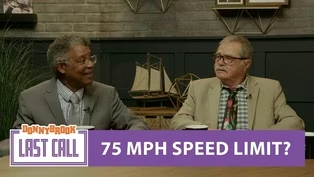
Donnybrook Last Call | October 29, 2026
Video has Closed Captions
Clip: S2026 Ep44 | 11m 23s | The panelists discuss a few additional topics that weren’t included in the show. (11m 23s)
Providing Support for PBS.org
Learn Moreabout PBS online sponsorship New Episode
- News and Public Affairs

Top journalists deliver compelling original analysis of the hour's headlines.

- News and Public Affairs

Today's top journalists discuss Washington's current political events and public affairs.



 New Episode


 New Episode
 New Episode




Support for PBS provided by:
Donnybrook is a local public television program presented by Nine PBS
Support for Donnybrook is provided by the Betsy & Thomas O. Patterson Foundation and Design Aire Heating and Cooling.