
Inspector Thomas Byrnes and the Evolution of Policing
Inspector Thomas Byrnes reinvents policing tactics in the 19th century using brutal methods.
From
Inspector Thomas Byrnes and the Evolution of Policing
Clip: Episode 2 | 11m 38sVideo has Closed Captions
Inspector Thomas Byrnes reinvents policing tactics in the 19th century using brutal methods.
By the time he is nine years old, George Appo is living on the streets in one of New York's roughest neighborhoods, and he turns to picking pockets to support himself. Pickpocketing is lucrative until he is caught by the police under the purview of Inspector Thomas Byrnes. Famous for solving spectacular robberies and murders, Byrnes and his men have turned to brutal methods to solve crimes.
From
Problems playing video? | Closed Captioning Feedback
Problems playing video? | Closed Captioning Feedback
Episodes presented in 4K UHD on supported devices. Major funding for CRIME AND PUNISHMENT IN AMERICA was provided by The Atlantic Philanthropies, Emerson Collective, The Andrew W. Mellon Foundation, and...
Inspector Thomas Byrnes and the Evolution of Policing
Clip: Episode 2 | 11m 38sVideo has Closed Captions
By the time he is nine years old, George Appo is living on the streets in one of New York's roughest neighborhoods, and he turns to picking pockets to support himself. Pickpocketing is lucrative until he is caught by the police under the purview of Inspector Thomas Byrnes. Famous for solving spectacular robberies and murders, Byrnes and his men have turned to brutal methods to solve crimes.
From
Problems playing video? | Closed Captioning Feedback
Where to Watch Crime and Punishment in America
Crime and Punishment in America is available to stream on pbs.org and the PBS app.
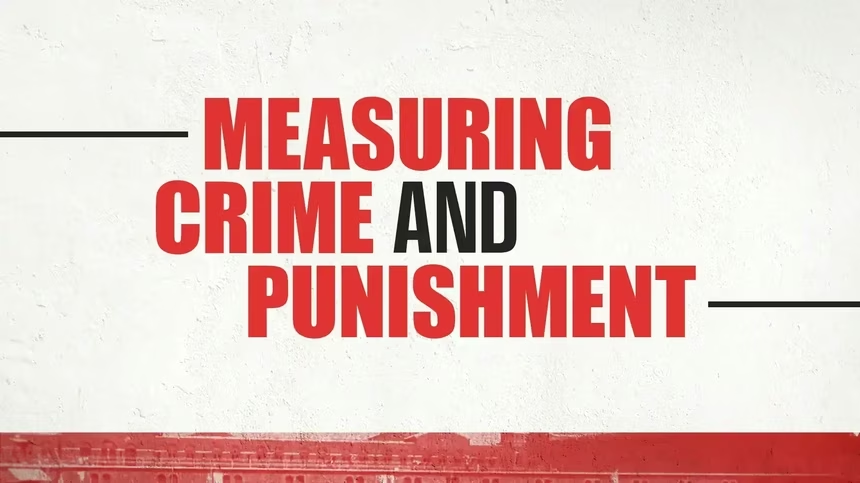
Measuring Crime and Punishment
How does the way we collect and measure crime shape our understanding of it? Crime statistics can tell us how crime changes over time. But the way crime is measured, defined, and communicated can also shape public perception and policy.Providing Support for PBS.org
Learn Moreabout PBS online sponsorshipVoice: Among the criminals who fill the prisons are many who habitually gain their livelihood by the profession of picking pockets.
Not infrequently, the youth who begins as a newsboy develops into the hardened man who pauses at nothing in the fulfillment of his desires, and unhesitatingly takes the life of a fellow-being.
The "New-York Daily Tribune."
Narrator: George Appo was 17 years old when he was arrested for trying to steal a gold watch and chain.
At the station, he gave the police an alias and lied about his age.
Voice: I pleaded guilty, but through fear of being sent to the House of Refuge, which at that time was a house of torture, I gave the name of George Dixon, age 18.
As the detective had told the judge I was anything but good, he sent me to state's prison.
[George Appo] Narrator: Prosecutors and judges saw to it that pickpocketing was punished severely, in some cases as severely as violent crime.
The judge sentenced Appo to 2 1/2 years of hard labor at Sing Sing, which, in the 50 years since its creation, had become one of the biggest manufacturing complexes in the world.
Its workforce--1,200 men and a handful of women-- was larger than most American factories, steel mills, and plantations.
Seven days a week, the prisoners were forced to toil for private contractors: quarrying slabs of marble, forging molten iron into stoves, and making hats and chairs.
Gilfoyle: The emphasis is on making a profit.
So it was actually the contractors that had more control over the keepers, over the guards than the warden themselves.
Narrator: In the shops, contractors made the rules and directed the keepers to discipline any prisoners who broke them.
When Appo arrived at Sing Sing under the alias George Dixon, he was surprised to encounter his father, who had completed his ten-year murder sentence, and was now serving time for assault.
Voice: My unfortunate father learned from someone of my being sent there, and instead of being quiet about it, got permission from the warden to see and speak with me.
The result was "The son of the notorious murderer Quimbo Appo is now at Sing Sing" got into the newspapers, and made things in general very unpleasant for me.
[George Appo] Narrator: George Appo was assigned to work in the laundry.
In the summer, temperatures could reach 150 degrees.
On his third day there, Appo accidentally burned a shirt, and was beaten with the most feared instrument of punishment at Sing Sing--the paddle.
[Paddle whacks] Voice: Fancy for yourself a man fastened wrists and ankles, in a stooping position, and struck with a piece of flexible wood or leather perforated with holes at the end, and, when lifted from the naked back, sucks the flesh with it.
[The "Pilot"] Gilfoyle: The paddle.
It would create a sense of terror, actually, in the part of people incarcerated in Sing Sing.
One prison guard actually quit because when he would enter the cafeteria at night, he remembered seeing men that had been paddled literally crying at their tables, praying to the Virgin Mary because they were in such pain.
Some men tried to commit suicide upon learning they were about to be paddled, jumping off from the third or fourth tiers of their cells.
Narrator: Appo managed to survive two years at Sing Sing, returned to New York City, and went back to pickpocketing.
Before long, he was arrested again, convicted, and sent back to prison for 2 1/2 more years.
When he was released, he resolved to find honest work.
Voice: I started looking for work in a hat factory and applied for a job.
He asked me where I worked last.
I told him in state prison.
He got up from his chair and said, "We have no vacancy."
I then went to Newark, New Jersey, and applied at two different hat factories but met with no success.
I returned to New York and went direct into an opium joint at 4 Mott Street, where I knew I could meet some of my former associates, and I learned the different systems by which one could earn money easy and with less risk than picking pockets.
[George Appo] Narrator: The system for making easy money that Appo learned was called the green goods game, and it was one of the most devious scams in America.
The con-men who ran it claimed to be selling counterfeit bills--green goods-- that were so well made, they could easily pass for genuine legal tender.
Their sales pitch was aimed at anyone thought to be down on their luck.
Voice: Dear Sir, your name and address was given me by my confidential agent, who said he thought you were a man in a position to handle my goods in safety.
My business is not exactly legitimate, but the "Green Articles" I deal in are safe and profitable to handle.
The sizes are $1.00, $2.00, $5.00, $10.00.
Do you understand?
I remain Yours in Confidence.
[Green goods circular] Narrator: George Appo went to work for some of the most successful green goods operators in the country.
His job was to greet unsuspecting customers at their hotel and escort them to an office nearby, where a colleague would show them the merchandise-- a satchel filled with dollar bills.
Gilfoyle: The individual would be impressed by the quality of the counterfeit money and would agree to purchase them.
The money would then be put in a bag.
And as the individual was paying, someone would substitute another bag.
They would come back to Kansas or Ohio or wherever they came from.
They would open up the bag, and it would be filled with blank paper, a brick, or sawdust.
And the individual had no recourse because they had just attempted to defraud the federal government.
Narrator: In order to do business in New York, Appo's employers made regular payments to the police, who looked the other way, so long as the con men preyed only on out of towners.
Early one morning, Appo was sent to Poughkeepsie to reassure two green goods customers, who had gotten cold feet.
But when he got to their hotel, he could not convince them to go through with the deal.
Voice: I said to Mr.
Hogshead, "I'm very sorry to hear you "talk in that manner.
"You are leaving an opportunity of your life go by unheeded, so I will bid you good-bye."
I turned my back to him, and Hogshead sneakingly took from his satchel a big Colt's revolver, put it to the back of my right temple, and shot me.
[George Appo] [Gunshot] Narrator: Appo somehow survived the shooting, but he lost his right eye.
He was arrested and charged with aiding and abetting green goods operators.
George Appo now found himself on the front page of the newspapers, recognizable and notorious.
That notoriety would have serious repercussions.
 New
Clara Sheldon Smith's stunning mug shots
Video has Closed Captions
Clip: Ep2 | 1m 53s | Photographer Clara Sheldon Smith captures hundreds of mugshots in the early 20th century. (1m 53s)
 New
Video has Closed Captions
Clip: Ep2 | 5m 37s | The American public grapples with the question of if criminals are born or made. (5m 37s)
 New
The Execution of Roxalana Druse
Video has Closed Captions
Clip: Ep2 | 2m 34s | In 1887, the botched hanging of Roxalana Druse causes Americans to rethink the death penalty. (2m 34s)
 New
The Federal Government vs. Indigneous Justice
Video has Closed Captions
Clip: Ep2 | 4m 45s | After a Lakota leader is murdered, the federal government overrules the tribe's resolution. (4m 45s)
 New
The Green Goods Game: The Most Devious Scam in America
Video has Closed Captions
Clip: Ep2 | 7m 42s | Unable to find legal work, George Appo turns to a devious scam, the green goods game, to make money. (7m 42s)
 New
How Racism and Eugenics Impacted the Criminal Justice System
Video has Closed Captions
Clip: Ep2 | 3m 22s | As millions of immigrants flood to the United States, the popularity of the eugenics movement grows. (3m 22s)
 New
Lawyer Clarence Darrow Steps Up to Defend the Sweet Family
Video has Closed Captions
Clip: Ep2 | 11m 10s | The legendary lawyer Clarence Darrow defends the Sweet family in their murder trial case. (11m 10s)
 New
The Lexow Commission Exposes Police Brutality and Corruption
Video has Closed Captions
Clip: Ep2 | 8m 40s | In 1894, the Lexow Commission forms to investigate corruption and police brutality among the NYPD. (8m 40s)
 New
The Police Clash with Bootleggers Over Prohibition
Video has Closed Captions
Clip: Ep2 | 5m 27s | Prohibition creates a black market for alcohol, leaving police struggling with enforcement. (5m 27s)
 New
The Story of the Sweet Family and Housing Segregation
Video has Closed Captions
Clip: Ep2 | 8m 53s | A white mob gathers to force the Sweet family into fleeing their new house in Detroit. (8m 53s)
 New
Suffragists Tell the Stories of Incarcerated Women
Video has Closed Captions
Clip: Ep2 | 6m 26s | Suffragist Kate Richards O'Hare details the experiences of the women she meets while incarcerated. (6m 26s)
 New
Thomas Mott Osborne Brings Reform to Sing Sing Prison
Video has Closed Captions
Clip: Ep2 | 10m 39s | After experiencing being imprisoned, Thomas Mott Osborne dedicates himself to reforming Sing Sing. (10m 39s)
Providing Support for PBS.org
Learn Moreabout PBS online sponsorship








Support for PBS provided by:
Episodes presented in 4K UHD on supported devices. Major funding for CRIME AND PUNISHMENT IN AMERICA was provided by The Atlantic Philanthropies, Emerson Collective, The Andrew W. Mellon Foundation, and...