Living St. Louis
How Did a Shark Become Syberg's Mascot?
Clip: Season 2026 Episode 16 | 5m 4sVideo has Closed Captions
The story behind the Syberg’s shark, a quirky mascot that has become an iconic symbol.
The story behind the Syberg’s shark, a quirky mascot that has become an iconic symbol of the family-owned restaurant and a South St. Louis landmark for more than 40 years.
Problems playing video? | Closed Captioning Feedback
Problems playing video? | Closed Captioning Feedback
Living St. Louis is a local public television program presented by Nine PBS
Support for Living St. Louis is provided by the Betsy & Thomas Patterson Foundation.
Living St. Louis
How Did a Shark Become Syberg's Mascot?
Clip: Season 2026 Episode 16 | 5m 4sVideo has Closed Captions
The story behind the Syberg’s shark, a quirky mascot that has become an iconic symbol of the family-owned restaurant and a South St. Louis landmark for more than 40 years.
Problems playing video? | Closed Captioning Feedback
Where to Watch Living St. Louis
Living St. Louis is available to stream on pbs.org and the PBS app.
Providing Support for PBS.org
Learn Moreabout PBS online sponsorship- Have you ever met someone with an irrational fear of sharks?
Well, I'm one of those people.
And while most can trace their fear back to a childhood viewing of Jaws, mine started in a very different way.
1983, squeezed between my parents in the front seat of the Caprice Classic, driving down Gravois Road.
Of course, I can't exactly remember the first time that I noticed the giant cyborg shark floating above me.
But once I did, it became a dreaded part of the ride home.
Over four decades later, I decided to face my fears and get the story behind the iconic landmark.
♪♪ Walking in here today to do this interview, there's some customers downstairs.
They've been our customers for 46 years.
You know, and we've met so many wonderful people, a lot of friends.
You know, a lot of our customers become our friends.
When his parents, Richard and Sally, opened the original Syberg's restaurant on St.
Patrick's Day in 1980, 18-year-old Kirk started out in the kitchen.
It was a big family affair.
It was six kids and my mom and dad, and we had an aunt and a grandma working here.
And, you know, there was apartments where we're standing today.
My brothers and I lived upstairs and we never ate up here.
We had the restaurant downstairs, so we didn't think we had a foosball table in our kitchen up here.
So, yeah, it was a party for sure.
So how did a shark become the symbol of a family-owned restaurant in our Midwestern city?
What happened was Rick, he was a neighbor that we grew up in, in the neighborhood.
Rick Monrodis was his name.
He was a customer and he was an artist.
He was a very good sculptor and the first shark we ever purchased, he brought it in and just put it up there just like some of the other stuff we have on the walls.
There's no rhyme or reason to it.
It's just let's put a shark up on a wall.
The unique thing about the head that he made, it's like fiberglass, but he actually put real shark teeth in the mold.
So then Rick Monrodus wanted to maybe get some publicity for himself as an artist, so he created this, you know, 40-foot shark.
He did the head and then he did the tail, and then he painted a body in between the two, and then he did a big mural out on the wall, and I mean, we definitely got a lot of publicity out of it.
The global success of Steven Spielberg's 1975 film, Jaws, had, for better or worse, given sharks the ability to swim around rent-free in people's minds, and Sybergsdecided to lean in to their accidental mascot.
My brother had come up with the idea, "Let's start serving shark."
Well, you know, nobody eats shark, nobody had eaten shark.
Sybergsbegan offering shark steaks, shark bites, and even shark tacos, with a side of irresistible advertising.
We had bumper stickers made, and it was "Get Even, Eat a Shark."
But for Cybergs, serving shark meat wasn't about the revenge.
Shark was a bycatch, so they were fishing for other fish, and the Mako shark would get on the line, and they would die, so they were just throwing them out.
I mean, our customers loved it.
It was really a good product for us, you know, very lean, you know, very tender.
By the end, we were serving 60,000 pounds of shark a year.
- But just like a film franchise with increasingly disappointing sequels, the enormous consumption of the shortfin Mako shark was deemed unsustainable.
The species was not only being overfished, but it is also slow to reproduce and often does so only once or twice in its lifetime.
So even accidental hookings or bycatches were banned by U.S.
federal law in 2022.
So we don't serve it anymore.
And, you know, it's probably at the end of the day, it's probably a good thing.
The Sybergsfamily now has several restaurant locations, all sporting at least one signature shark in the dining room.
But none can compare with the 40-foot beast that has been cruising above Gravois Road since 1982.
We were living upstairs and the shark tail got stolen off the wall.
Come to find out some some girls had saw it at a party and it was a conversation piece for whoever took it.
And we found out who it was and got it back from them.
So it worked out good.
And when we put it back up there, yeah, so there was a little bit of history there.
You know, not a lot of people know that story.
As the original Sybergsexpanded and added a patio, the shark and the mural see that it swims in got its own updates.
Rick Monrodus redid the mural a few times and then Ray Harvey, another muralist in St.
Louis who's locally known well, he's come back and he's redid it like when we put the new awning out there.
It's been a great piece of history for us.
We still put the shark on all of our logos and hats and, you know, and everybody knows us by it.
I still have kids, you know, talk about today.
They drive up and down Gravois just to see the shark on the wall.
As for me, I've made my peace with the Sybergs shark.
It was never personal.
 New
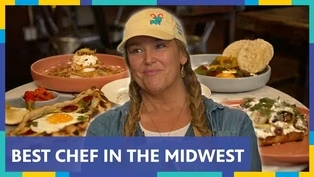
James Beard Award Winner Loryn Nalic
Video has Closed Captions
Clip: S2026 Ep16 | 7m 49s | Loryn Nalic earned the James Beard Award for Best Chef: Midwest. (7m 49s)
 New
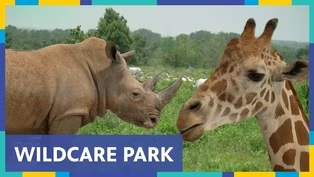
New Safari Park Coming to St. Louis in 2027
Video has Closed Captions
Clip: S2026 Ep16 | 6m 28s | Endangered hoofed animals are settling into their new habitat at WildCare Park in Spanish Lake. (6m 28s)
Providing Support for PBS.org
Learn Moreabout PBS online sponsorship












Support for PBS provided by:
Living St. Louis is a local public television program presented by Nine PBS
Support for Living St. Louis is provided by the Betsy & Thomas Patterson Foundation.